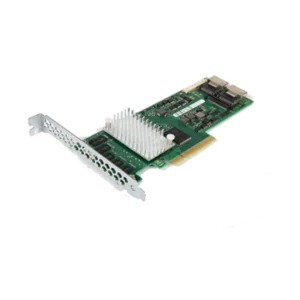
RAID Controllers are essential components that play a crucial role in managing and optimizing the performance of storage systems. These sophisticated devices are designed to handle the intricacies of data management and ensure the reliability and efficiency of RAID (Redundant Array of Independent Disks) configurations. By employing a RAID controller, users can achieve higher data throughput, redundancy, and even drive storage performance to new heights. Whether in small business environments or large data centers, RAID controllers provide the stability and scalability necessary for modern data demands.
The primary function of a RAID controller is to manage the data set across multiple hard drives, allowing them to function as a single unit. This integration enhances the system’s fault tolerance, safeguarding against data loss in cases of hardware failure. One of the highlighted benefits of using a RAID controller is its ability to perform complex logic operations, reducing the CPU load from the host system. This feature ensures that tasks like data redundancy calculations are handled efficiently, enabling the server or computer to allocate resources to other critical processes.
RAID Controllers are available in several types, each catering to different needs. These include hardware RAID controllers, which offer dedicated processing power independent of the system CPU, and software RAID solutions that provide cost-effective RAID functionality with easier implementation. Among the hardware options, users can find controllers supporting various configurations, such as RAID 0 for performance, RAID 1 for mirror redundancy, or more advanced setups like RAID 5 and RAID 6 that balance performance with high levels of data protection. Choosing the right RAID controller depends largely on the specific performance and redundancy requirements of the intended workload.
A significant benefit of investing in a RAID controller is the added layer of data security. By distributing data across multiple disks, RAID systems offer a vital safeguard against potential data loss from disk failures. This ability to maintain data integrity is particularly crucial in environments where uptime and data availability are of utmost importance.