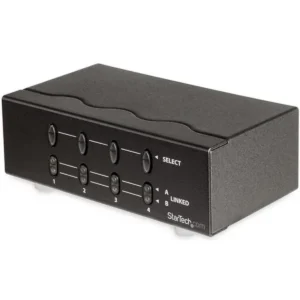
Discover the world of Matrix Switchers, an essential component in the landscape of audio and video management systems. These ingenious devices are designed to route multiple audio and video sources to multiple destinations, making them invaluable in environments that require versatile input-output configurations. Whether you’re managing a major corporate conference room, controlling multimedia exhibits in a museum, or running a state-of-the-art home theater system, matrix switchers offer the flexibility to control it all from a central hub.
The primary advantage of using a matrix switcher is its ability to simplify the management of numerous inputs and outputs. Gone are the days of manually switching cables and sources. Instead, you can easily decide which input should send its signal to which output, all with the touch of a button or via remote access. This capability greatly enhances efficiency, saves time, and reduces the complexity of managing extensive wired connections, making it possible to create smooth and seamless transitions between different audio-visual elements.
Matrix switchers come in various configurations, each suited to different needs and scales. From compact models with a straightforward 2×2 (2 inputs and 2 outputs) setup to more extensive 16×16 or even larger configurations, businesses and individuals can find a solution that precisely matches their operational requirements. Some advanced models also offer features such as scaling, digital signal processing (DSP), and IP streaming, which further enhance the functionality and adaptability for complex integration projects.
One of the standout benefits of modern matrix switchers is their compatibility with a wide range of connectivity options, including HDMI, SDI, DVI, and even wireless solutions. This makes them incredibly versatile, allowing for seamless integration into existing systems without the need for costly infrastructure changes. Many contemporary units also support HDCP, ensuring secure transmission of high-definition content, a critical feature for maintaining compliance with digital content protection standards.
The integration of control systems is another key aspect of today’s matrix switchers. Many units are compatible with RS232, IR, and IP-based control protocols, enabling remote management and automation. This capability is particularly advantageous for large spaces where direct access to each switcher might be cumbersome. By centralizing control, users can dramatically improve the audio-visual experience, providing a professional and polished presentation no matter the venue or event.
As you explore our selection of matrix switchers, consider the specific needs of your setup, including the number of sources and displays, signal type compatibility, and future expansion plans. By choosing the right matrix switcher, you empower your system with flexibility, scalability, and unparalleled efficiency, ensuring your audio-visual presentations are always at their best.