
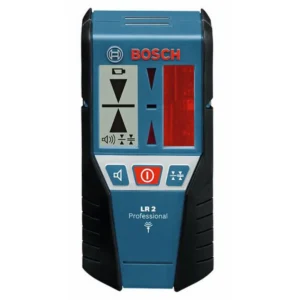
Laser receivers are indispensable tools in the realm of construction and surveying, known for their ability to enhance the precision and efficiency of laser level systems. These devices detect laser beams emitted from rotating and fixed laser levels, allowing for straightforward alignment tasks over vast distances. Accuracy is critical in construction projects, and laser receivers help professionals achieve precise leveling, grading, and excavation results by converting the laser’s beam into easy-to-read signals. This functionality ensures that measurements are always accurate, minimizing errors and improving overall project quality.
The versatility of laser receivers makes them suitable for a variety of applications. From basic indoor tasks to demanding outdoor projects, these devices are engineered to work seamlessly with both red and green laser levels, adapting to various environments and conditions. Many laser receivers come equipped with features like built-in LED displays and audible alerts, providing immediate feedback to the user. This capability ensures accurate measurements are maintained even in challenging lighting conditions, such as bright sunlight where laser lines may be difficult to see.
Professionals seeking durable and reliable solutions will appreciate the wide selection of laser receivers designed to withstand harsh working environments. Many models include robust, weather-resistant casings, ensuring longevity and durability on the work site. Features such as adjustable sensitivity settings allow users to customize the receiver based on specific project requirements, further enhancing their utility. Laser receivers are typically equipped with strong mounts, making them easy to attach to various surfaces or equipment, which ensures they remain in place during the most demanding tasks.
The different types of laser receivers available cater to a range of needs from basic to sophisticated, providing solutions for every level of expertise and budget. Entry-level laser receivers are perfect for simple DIY projects, offering essential functions at a cost-effective price. On the other hand, advanced models support complex features like automatic calibration and grade control, ideal for professional users who require high precision and automation.