
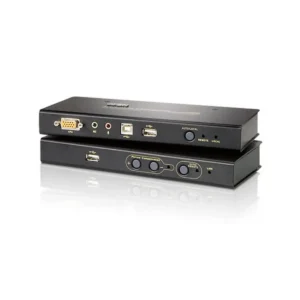
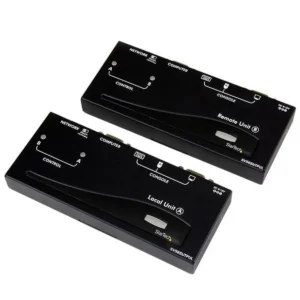
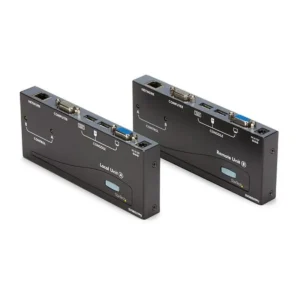
In the realm of modern IT infrastructure, KVM extenders play a crucial role in bridging distances, magnifying efficiency, and optimizing workspace layouts. These devices are essential for extending the reach of your Keyboard, Video, and Mouse signals, allowing you to manage servers and workstations that are situated far from the control area. Whether you’re operating within a corporate environment, a broadcast studio, or a secure data center, KVM extenders ensure seamless connectivity and robust control over multiple systems remotely, all without sacrificing quality or responsiveness.
One of the primary benefits of using KVM extenders is their ability to enhance flexibility and convenience within network infrastructure. By transmitting keyboard inputs, video outputs, and mouse signals over long distances, they enable users to control computers that are located in isolated, secure, or hard-to-reach areas. This not only protects sensitive equipment from environmental hazards and unauthorized access but also allows IT professionals to consolidate resources in a centralized location while maintaining operational capabilities from various remote stations.
KVM extenders come in various types, each uniquely designed to cater to specific needs. IP-based KVM extenders offer unparalleled flexibility by utilizing standard network infrastructure, which is ideal for situations where you need to extend signals across vast distances or even between different geographical locations. On the other hand, fiber optic KVM extenders provide cutting-edge performance with low latency and high-resolution support, perfect for applications where signal quality is paramount. For simpler setups, CATx KVM extenders are an economical and reliable option, using standard CAT5/6/7 cables to transmit signals up to 300 meters.
Another compelling advantage of KVM extenders is their ability to support high-definition video content. Many modern extenders can handle 4K resolutions with ease, ensuring that video quality remains crisp and clear, whether viewed on a small monitor or projected onto a large screen. This makes them essential in industries such as media production and digital signage, where visual fidelity is critical.